
Ceramic disc capacitor
Identify a leaded ceramic capacitor and check its capacitance, voltage rating and dielectric behavior before using it for bypassing.

Overview
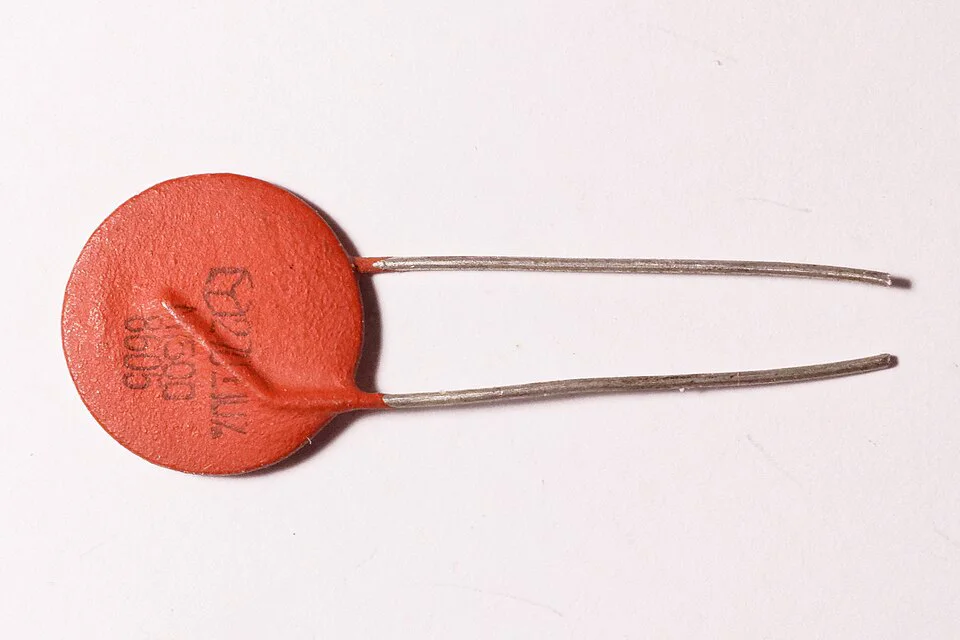
A ceramic capacitor stores charge between electrodes separated by a ceramic dielectric. A disc package has two leads; the leaded footprint does not tell you the dielectric or capacitance by itself.
Markings and use
Use the printed part code and manufacturer sheet to identify the nominal value. Place a supply bypass capacitor close to the device it serves so the path for transient current stays short. Choose a rated voltage above the voltage actually applied.
Capacitance under bias
High-dielectric-constant ceramic capacitors can lose effective capacitance under DC bias. A nominal reading at the meter’s small test voltage can therefore differ from capacitance in a powered circuit.
Specifications
| Parameter | Value or condition | Source |
|---|---|---|
| Polarity | Ordinary two-lead ceramic discs do not have a positive and negative lead | Murata |
| Effective capacitance | Depends on dielectric and voltage; consult the selected part’s bias curves | Murata |
Compatibility and practice
No firmware needed; select the dielectric and voltage rating for the actual circuit.