
RP2040 microcontroller
Explore the bare RP2040’s SRAM, programmable I/O and external flash interface, and distinguish it from a Raspberry Pi Pico board.

Overview
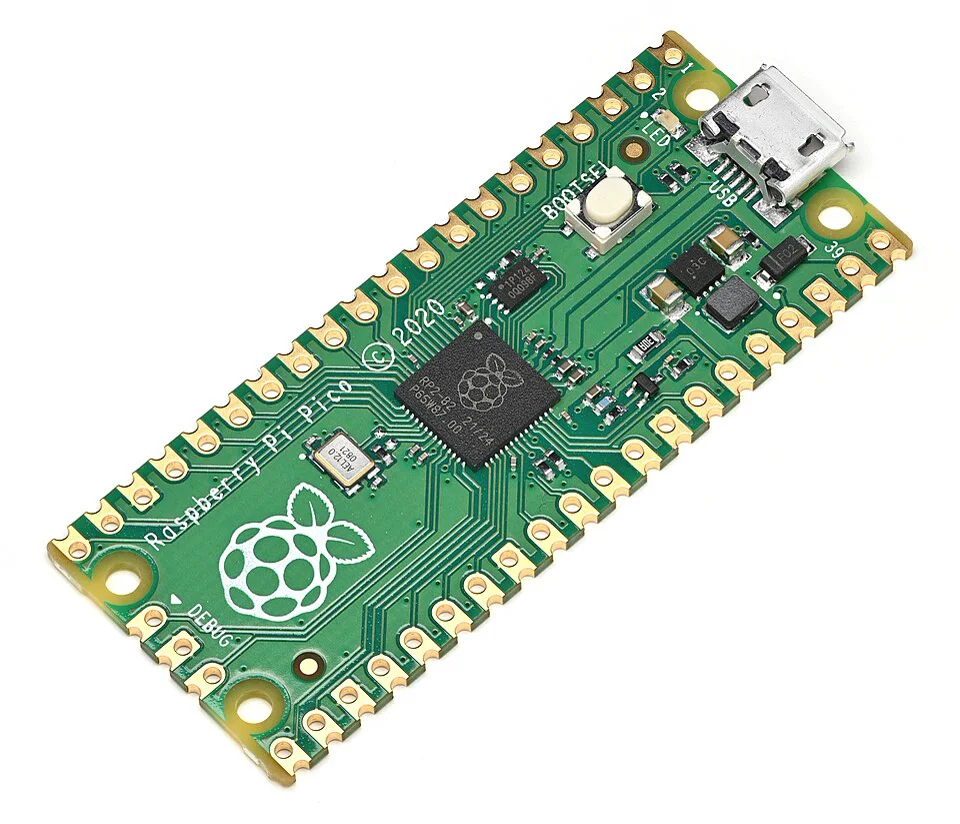
RP2040 is the chip on the original Pico. Unlike the Pico board, the bare component does not include a USB connector, flash package or finished power circuit.
How it works
The programmable I/O blocks run short state-machine programs that move information to and from GPIO independently of the processor cores. They are useful when an interface needs timing that a software loop cannot reliably maintain.
Package and boot
Pin numbers in the QFN package are unrelated to Pico header positions. The chip boots from ROM and can execute firmware from external QSPI flash through its execute-in-place interface. Follow the datasheet’s package drawing and reference power connections when designing a board.
Specifications
| Parameter | Value or condition | Source |
|---|---|---|
| CPU cores | Two Arm Cortex-M0+ cores | Raspberry Pi |
| On-chip SRAM | 264 kB | Raspberry Pi |
| PIO resources | Two blocks with four state machines each | Raspberry Pi |
Compatibility and practice
The bare chip requires a supporting circuit; Pico firmware targets a board configuration.
Related components
Sources and datasheets
- RP2040 datasheet · Raspberry Pi